
What is Play based learning?

By the team at Playground Ideas & Nudel Kart, June 2020

“Play is very important for children. Through play, babies and young children explore and learn to understand the world around them as they come to communicate, discover, imagine and create. When children play they are showing what they have learned, and what they are trying to understand.”

(Australian Government Education Department, Early Years Learning Framework)

So why is it so important to use Play as the basis for learning?

Play is a deep need in every brain, so deep in fact that it predates us as humans. All mammals and even birds use play as their first tool for learning the critical fundamental skills for success throughout their life span.

And Play is the tool that the brain uses to learn whatever it is developmentally ready to learn. Whether it is stacking blocks to explore the physical properties of the universe or to simply make a friend. Play is there to help explore, compare, evaluate, practise, and so on, until the goal is mastered.

To prompt children to Play, the brain rewards them with generous doses of positive hormones such as endorphins, dopamine and adrenaline. The result is often happiness, joy, and energetic and loud behaviour which unfortunately is not always enjoyed by adults seeking didactic outcomes for interventions. Yet it is precisely the organic, messiness of Play that is its strength. 

Play can prepare children for an uncertain future

Valuing children’s Play is to truly trust that the human brain has its own processes and timeline for development. Observing a child carefully in Play and following the child’s cues is the place any educator or carer should start from if they wish the child to learn something quickly and easily.

This guarantees that the child will not lose the love of learning which is one of the biggest sins many education systems can effect.

And it allows the child to incorporate school learning with ‘other’ crucial learning such as problem solving, socialisation, and skills that are important for success in STEM disciplines and the like. Preparing them for a dynamic future.

Play is a core need for ALL children

Based on almost 60 years of longitudinal data, UNICEF identified 3 core needs for children to thrive particularly after war, disaster and the effects of poverty. Nutrition and love and care are well known but equally important yet currently under prioritised is stimulation.

The combination of toxic stress and a lack of stimulation can delay a child’s development by years.  Because humans develop so rapidly in their early years this effect of trauma has a disproportionately large effect on that child and their capacities going into adulthood . It is now clear that this early development deficit leads to significant reductions in opportunity and capacity in adulthood. When viewing this at the macro scale, the loss of human potential, GDP, and costs to healthcare from a lack of stimulation, factor into the $US billions of losses for nations. 

Whilst Play is important for children living with poverty and disadvantage, it also has an increasingly important role in the developed, over-protected, over-scheduled world of the West. For an average child in an average suburb in a developed country such as Australia or the UK, Play adds the unpredictable real world element to learning; it supercharges the brain in all the skills essential for our complex lives. And for the growing number of children living with toxic anxiety about their future, Play creates an oasis of low stress that can help them get back on the path of normal, healthy development.
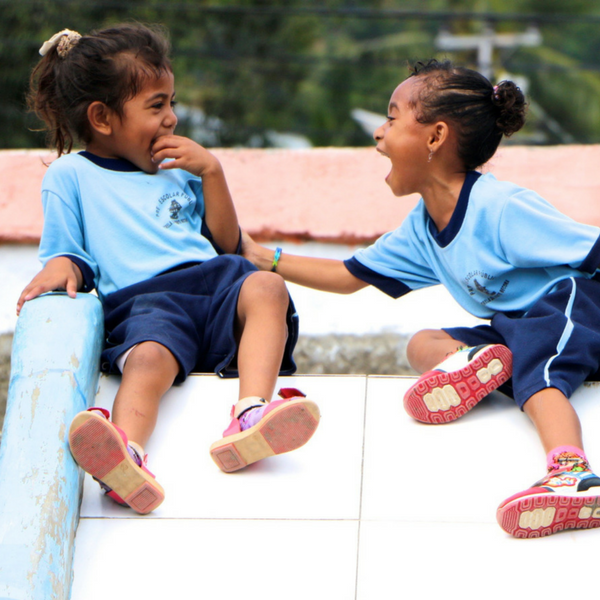
Play should be a fundamental part of learning.

Things to remember about Play:

It comes naturally
  • Children have the urge to play
  • Children need to play
  • Play is self-directed and intrinsically motivated
Promotes Learning
  • Play promotes problem solving and problem posing
  • It unlocks imagination and curiosity
  • Play develops 21st century skills
Essential for wellbeing
  • Play helps children process what’s happening in the world
  • It is fun and safe 
  • Play is therapeutic
  • Play is fundamental to healthy development (Individuals and communities)
Types Of Play

There are lots of ways to play. Hughes, ( 2002) suggests there are 16 different types of play. When deciding how to set up for play, consider the following possibilities. 

Types of PlayExamples of what children might be doing
Social PlayListening, talking, sharing, taking turns, playing games, making up rules, teaching friends.
Object PlayManipulating objects, building,  connecting, combining materials.
Imaginative PlayPretending and imagining. Creative role play.  Being a singer in a band, teacher, father with a newborn.
Creative PlayCreative expression. Painting, singing, designer, dancing, writing or drawing. 
Sensory PlayExploring smell, sight, sound, touch and feel. Feel the surfaces of different materials, create sound and colours.
Active PlayBeing active with your body. Jump between objects, dance, roll and slide.

(Table adapted from Sewell, C. Wilson, J. Laing, B. and Veerman, M. (2020) Nüdel Kart Teachers Manual.)

Turning things around

Through the tireless work of so many since the 1970s, Play with caregivers and peers is no longer on the sideline but is now being taken seriously as a critical tool for human development and for economic and civic growth. Across the globe, longitudinal studies show that if a child plays in early life their overall development heads in one direction, and that direction is up (Gertler et al., 2013).

One longitudinal study showed that adding as little as 1 hour a week of stimulating play for young children increased adult earnings by 42%.

Reference: Gertler P, Heckman J, Pinto R, Zanolini A, Vermeersch C, Walker S, Chang S, and Grantham McGregor S, “Labor Market Returns to Early Childhood Stimulation: a 20-year Follow up to an Experimental Intervention in Jamaica”, National Bureau of Economic Research, Working Paper No. 19185, June 2013

What are “Loose parts” play?

Loose Parts is simply a name for stimulating materials that children can use to learn how the world works.  Unlike “normal” Playgrounds or most toys, loose parts are open ended and reusable in an infinite number of ways depending on the child’s needs for development. 

It is precisely because of their open-endedness that loose parts engage the highest forms of thinking and interaction such as creativity, problem solving, social skills and emotional intelligence. They are also excellent for psycho-social support to children from traumatised and disadvantaged backgrounds and can be tailored to the various contexts that it is used in. 

There is a reason why LEGO, MECCANO on one hand, and Matchbox cars and Dolls like Barbie on the other, are the world’s most popular toys. It’s because they have 2 key characteristics. Infinite possibilities for the former and imagination and role play for the latter. 

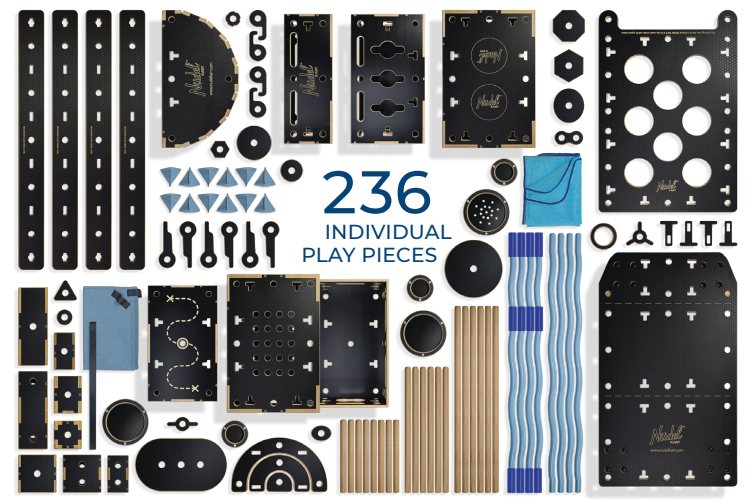
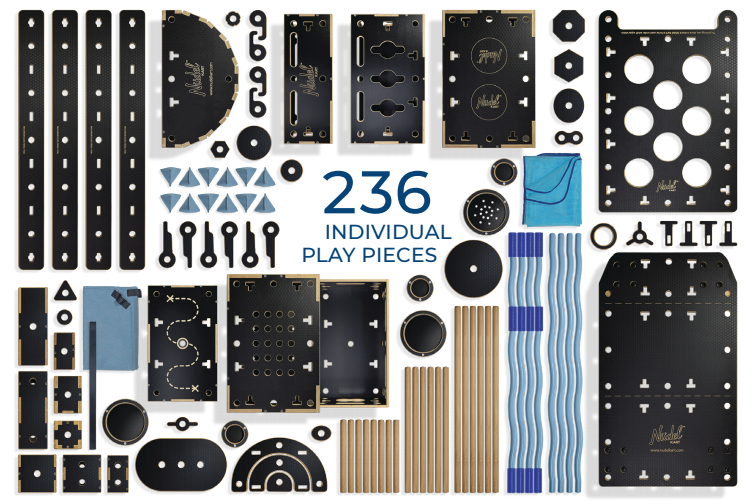
Nüdel Kart comes with over 200 loose parts to support play based learning
Nüdel Kart – a great example of loose parts for play based learning

Playground Ideas and Play

Playground Ideas (PI) is an open source resource that supports people in all countries to provide environments that help children reach their full developmental potential. PI now has over a decade of experience in creating and sharing resources online (manuals, designs, fundraising tools etc) to support communities at extremely low cost to build a play space anywhere in the world.
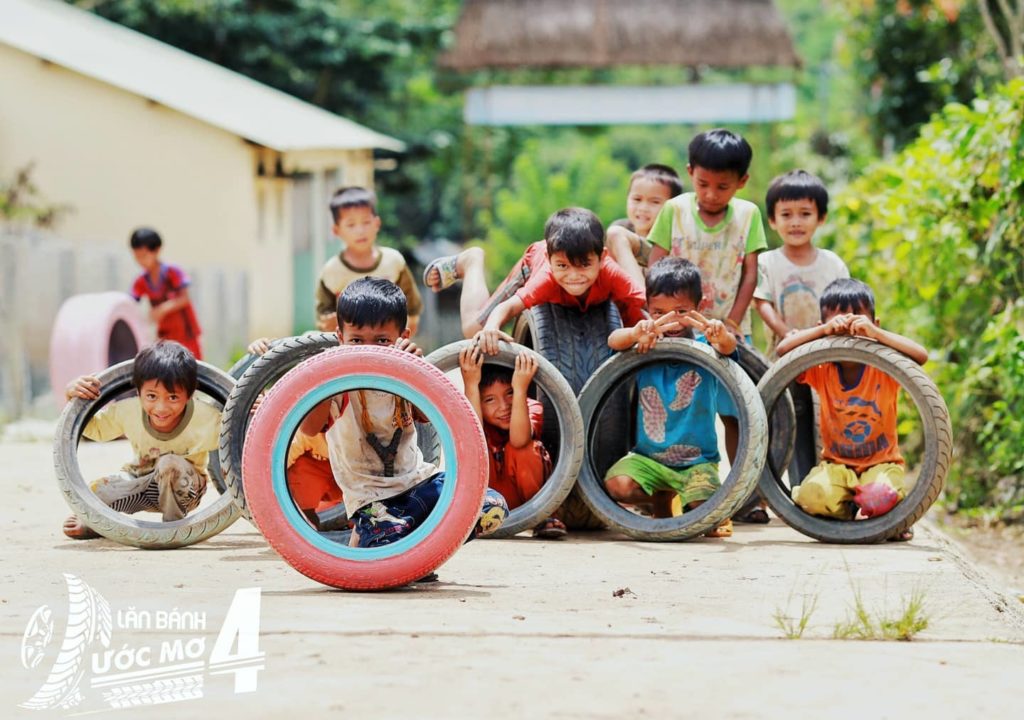
Our friends in Vietnam, Lan Bahn Uoc Mo, do great work in this space.

The team constantly updates and provides new materials and resources to support the changing world of Play, whether it’s a need for more “nature” Play or help in planning child friendly cities.

In the last 10 years, PI has grown exponentially from one Playground in 2007 to over 800 Playgrounds in 2019. It has now supported more than 3,600 community Play projects in 143 countries, enabling over 1.8 million children to access stimulating Play in some of the harshest and most desperate contexts on earth. 

But in some areas we were still failing…..our community-based model didn’t work for all organisations, governments and school systems. Custom-built Play spaces require a lot of time, volunteers and resources. We needed a simpler solution without compromising on meeting children’s needs. 

Enter Nüdel Kart

Playground Ideas has spent the last two years developing a new way to scale up Play simply and quickly across the globe without compromising on the deep, creative and sustained Play that children need. 

Developmental needs of children across the globe are remarkably similar; all children have often unrecognised but powerful internal tools to drive their development. With the assistance of Professor Anita Bundy from the University of Sydney and now the University of Colorado, Nüdel Kart has been designed as a deconstructable, mobile Play kart that can be reconfigured in endless ways to encourage self-directed learning and pair with the child’s urge to explore, experiment, imagine and Play.

Bundy operated the Sydney Playground Project, running multiple studies observing how children interact with different loose parts materials and seeking to understand how these materials improve aspects of children’s development (Bundy et al., 2011). 

Nüdel Kart has since been tested in refugee camps, private schools, children’s museums and even airports. It is inclusive and for all-abilities; it is non-gendered and non themed (no castles or pirate ships), so the children themselves can create a space that works with their individual needs and this can be started afresh every day as their skills and abilities change.

The Nüdel Kart aims to: 

  • Encourage child agency and intrinsic learning motivation
  • Evoke higher order thinking skills 
  • Support critical life skills such as problem solving, resilience and socialisation 
  • Support psychosocial development
  • Create close and caring relationships between parents, carers/educators and the child
  • Give children confidence and success in their own abilities creating a strong sense of wellbeing. 

Nüdel Kart encourages both infinite possibilities and imagination in a real child-sized and social environment with lots of children. It’s the combination of these elements that truly sets a child’s brain on fire.

Children learn through play. They learn to communicate, be friends, to think and change their mind. Play comes naturally to children. It’s instinctive and therapeutic. Play should always be a fundamental part of learning.

Marcus veerman, ceo and founder playground ideas
Loose Parts Play for Councils and Businesses

By Jeni Wilson

There are many occasions when engaging children through loose parts play would keep parents, their children, and customers happy.  Loose parts play can be both financially and emotionally beneficial for individuals, local councils, city councils, boroughs and businesses.

Think of all the times when entertaining children would, apart from the benefits themselves, expedite completion of your task, make it much more pleasant, and enable better engagement in the event or business. 

Scenario 1: Waiting at the airport 

How good would it be if children were able to happily and creatively play with loose parts kits before boarding the plane?

Instead of bored, hyperactive and sometimes anxious children, they step onto the plane less energised, calmer and mentally stimulated. Not only are parents and children happy, other customers and airline staff have a better flying experience. 

Scenario 2: New estates and real estate centres

Often these centres provide fixed outdoor playground equipment but these are not portable. Fixed playgrounds require supervision because of safety issues and are often too far from the offices to allow both parents to participate in decision-making. Wouldn’t it be great if they provided loose parts kits within eyesight of the parents/caregivers enabling better focus, and a less stressful experience.

When you think about it there are lots of times when parents, councils, businesses and children alike would find the provision of a loose parts kit advantageous. A simple example is whenever families have to wait for a service. Children get bored causing parents and other unnecessary anxiety and frustration.

Here are some examples:

  • Maternal health centres
  • Shopping centres
  • Doctor’s offices
  • School offices
  • Shire offices 
  • Council meetings
  • Local council  information sessions
  • Waiting to pick up food, goods, children

Perhaps parents simply want some time out but children aren’t interested or become quickly disinterested. For example: 

  • Community markets
  • Music events
  • Street festivals
  • Cheese and wine events
  • Art displays
  • Museums 
  • Galleries
  • Carols by candlelight
  • Libraries
  • Sporting events 
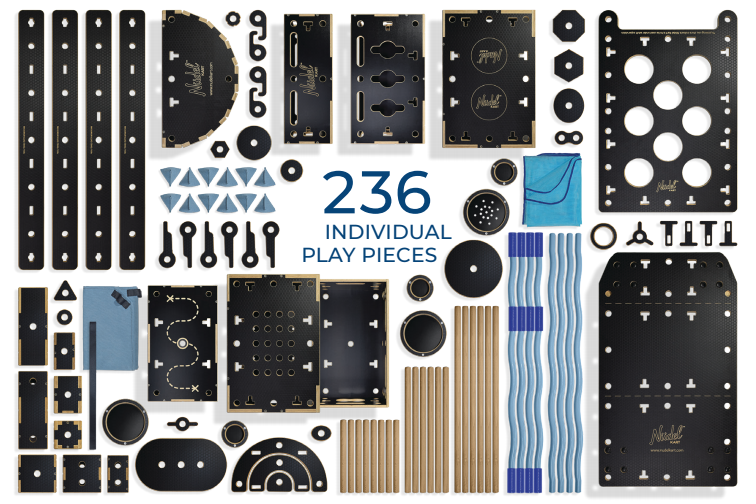
Over 200 loose parts play pieces in a Nüdel Kart

A research endorsed play solution

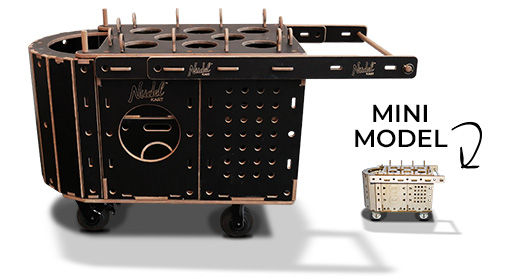
Introducing Nüdel Kart. This is an alternative playground idea. Nüdel Kart is a high quality, mobile playground that comes apart into many different pieces, filled with more than 200 loose parts that children can manipulate, build and play with. Nüdel Kart can be used in many settings, indoors and outdoors. It works across age groups from preschoolers to early teens. It is not gender or culture specific and is highly supportive to people of all abilities.

Nüdel Kart is a hands on resource that stimulates the children’s imagination, thinking, curiosity and social development and … here’s the good bit …can be packed up into an area around one metre square.

Nüdel Kart packed up. The Nüdel Kart fits in almost one metre squared. Compact and portable.

Councils, city councils, and boroughs could rent or lend a Nüdel Kart to any of these event organisers or council venues. 

Apart from anything else it’s plain, wholesome fun where everyone benefits. Ask your local council if they provide a Nüdel Kart for your community.

References

Sewell, C. Wilson, J. Laing, B. and Veerman, M. (2020) Nüdel Kart Teachers Manual (2020)


The Nüdel Kart Family Movie Night

(COVID-19 and ISOLATION approved!)

On May 8th, Playground Ideas are running a special screening of the Nüdel Kart documentary, “The Wheels of Wonder”, to coincide with the launch of the Nüdel Kart mini, and to help provide some entertainment to households during isolation.

Off the back of a SOLD OUT show at the Nova ‘Transitions Film Festival’, comes our feature length film for a special one off event.

TRAILER

Date: May 8th

Time: From 7pm (a link and password will be provided from Thursday 7th May until Monday 11th may)

Where: From the comfort of your own couch.

Is the film family friendly?  Yes, the film is suitable for young and old. 

How long is it? The movie runs for just over an hour and you will also get to briefly meet both filmmaker, Roger Ungers, and the CEO/Founder of Playground Ideas, Marcus Veerman.

Where does the money go? All proceeds from this screening will go towards helping create play spaces and delivering Nüdel Karts to children who need it most. Together, even in isolation, we can make an impact.

ABOUT THE MOVIE

The Wheels of Wonder  follows a team of ambitious social impact creators as they enter Lebanon’s capital, Beirut, with a curious project. Their mission: to trial and test an unusual prototype play cart with the hope of improving the lives of refugee children through “loose parts” play.

The project is led by Marcus Veerman, founder and CEO of Playground Ideas, a not-for-profit providing open-source playground building resources which benefit children all over the world. Veerman’s passionate and skilled team includes a Product Designer, Play Specialist and Technical Lead. Despite plenty of planning, the group face numerous challenges whilst constructing and trialling a material-based prototype in a country which is currently home to an estimated 1.5 million Syrian refugees.

This thoughtfully told story highlights the importance of play, which is said to be as crucial to a child’s brain development as food and sleep. The film shines a light on the immense challenges facing those who have been forcibly displaced, but transcends politics with uplifting moments of strength and resilience in the face of adversity.”

The Nüdel Kart Mini

Only 6 months after launching the full size Nüdel Kart to educators, we have fast tracked the Nüdel Kart Mini so your kids can have just as much fun at home with loose parts play. (And possibly provide you, the parents and carers, with some much needed relief!)

Check out the Nüdel Kart mini press release for more details,

About Nüdel Kart 

Nüdel Kart is brought to you by Playground Ideas, a non profit organisation that has been operating since 2007, building playgrounds and creating play for over 1.8 million children in over 143 countries. 

Nüdel Kart is a social enterprise. 100% of the profits go towards creating stimulating play spaces for children anywhere in the world.

Nüdel Kart is a deconstructable, mobile play kart that can be reconfigured in endless ways to encourage self-directed learning. It contains research-backed specially selected materials to stimulate children’s development.

About Playground Ideas

Playground Ideas supports anyone, anywhere, to build a stimulating space for play using local materials, tools, and skills. Playground Ideas has over a decade of experience creating resources and building a global community with specialisation in scale at low cost. Playground ideas have supported play projects in over 3000 communities, 143 countries, helping over 1.8million children to access stimulating play worldwide . Playground Ideas have now  launched Nüdel Kart, the world’s first loose-parts play solution designed for mass scale to impact millions. https://playgroundideas.org/

Playground Ideas was founded by Marcus Veerman in 2011, and he and Emma Ribbens co designed the Nüdel Kart.

Contact Marcus on  0432738719 or Laurette on 0408 003 099 for more information.

The Nudel Kart Mini

(A Social Enterprise by Playground Ideas)

Only 6 months after launching the full size Nüdel Kart to educators, we have fast tracked the Nüdel Kart Mini so your kids can have just as much fun at home with loose parts play. (And possibly provide you, the parents and carers, with some much needed relief!)

The Nüdel Kart Mini is a palm-sized complete replica of the Nudel Kart. And it comes complete with all the same loose parts. Over 200 in fact!

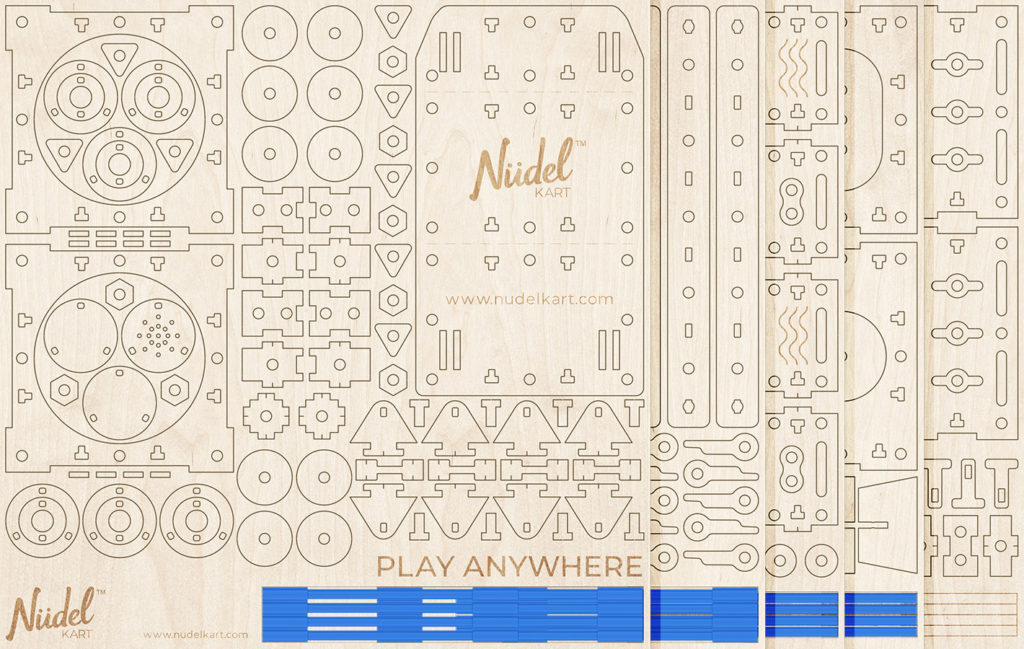
Designed for children 6+, the Nüdel Kart Mini will arrive in 5 separate plywood sheets which you then need to assemble. Mum or Dad, you might need to help with some of the more fiddly bits.

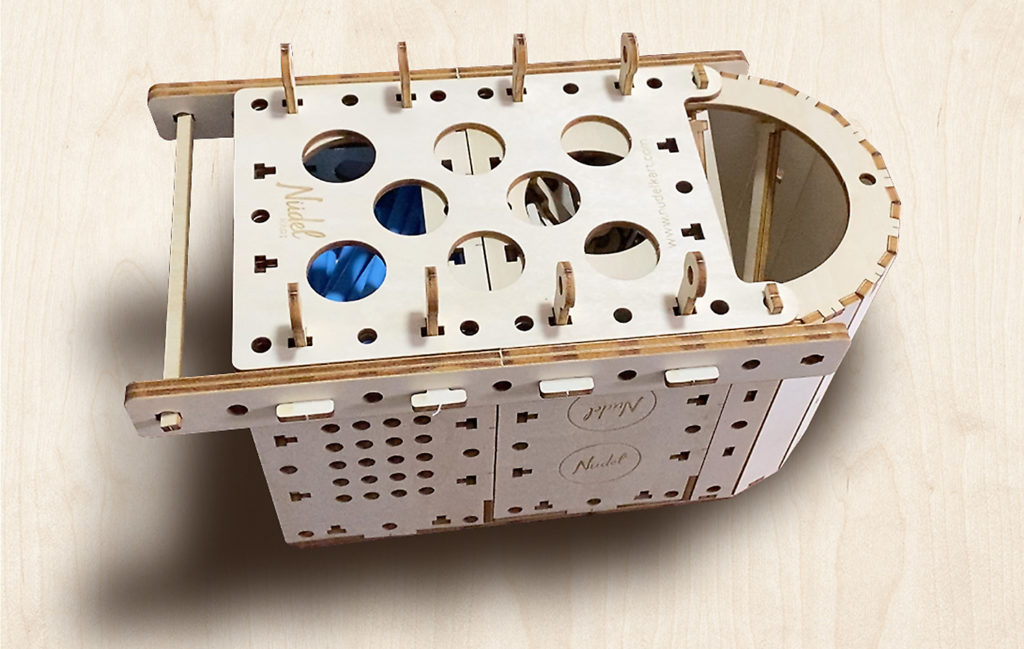
The pieces simply pop out and then click together. Simply follow the included instruction manual to make this…

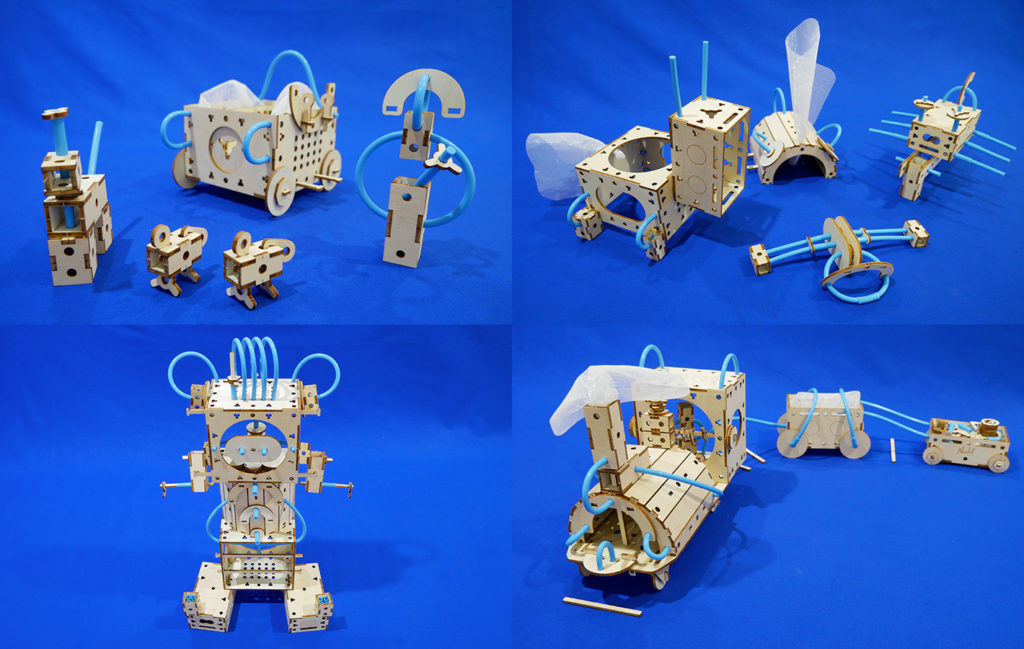
From there, it’s up to the imagination what you want to create. Just like the full sized  Nüdel Kart, the Mini can be deconstructed and rebuilt into millions of different configurations. 

We sold out of the first 100 we fast tracked but we have released an additional 100 at 25% off. In this unexpected environment, we have fast tracked production and you can pre order yours now for the Pandemic Price of AUD$44.95 plus shipping.

Normally AUD$59.00, this is a great addition to the toy cupboard that provides loads of play based learning potential such as creativity , innovation and problem solving. Shipping soon!

Purchase yours here.

For more information on the Nüdel Kart you can visit our  website.

AND ON FRIDAY 8th MAY WE ARE HOLDING A SPECIAL SCREENING OF THE NÜDEL KART DOCUMENTARY “THE WHEELS OF WONDER”. YOU CAN CHEK OUT THE TRAILER HERE AND BUY TICKETS NOW!

About the Nüdel Kart

Nüdel Kart is brought to you by Playground Ideas, a non profit organisation that has been operating since 2007, building playgrounds and creating play for over 1.8 million children in over 143 countries. 

Nüdel Kart is a social enterprise. 100% of the profits go towards creating stimulating play spaces for children anywhere in the world.

Nüdel Kart is a deconstructable, mobile play kart that can be reconfigured in endless ways to encourage self-directed learning. It contains research-backed specially selected materials to stimulate children’s development.

About Playground Ideas

Playground Ideas supports anyone, anywhere, to build a stimulating space for play using local materials, tools, and skills. Playground Ideas has over a decade of experience creating resources and building a global community with specialisation in scale at low cost. Playground ideas have supported play projects in over 3000 communities, 143 countries, helping over 1.8million children to access stimulating play worldwide . Playground Ideas have now  launched Nüdel Kart, the world’s first loose-parts play solution designed for mass scale to impact millions. https://playgroundideas.org/

Playground Ideas was founded by Marcus Veerman in 2011, and he and Emma Ribbens co designed the Nüdel Kart.

Contact Marcus on  0432738719 or Laurette on 0408 003 099 for more information.


Who is Dr Jeni Wilson?

You may have noticed a number of articles and blogs that Jeni has recently penned that have appeared on our Playground Ideas website.

Dr Jeni Wilson has known the Playground Ideas Founder, Marcus Veerman, for a number of years, and last year was invited to be part of the writing team to help with the launch of the Nudel Kart and the teacher training manual that supports this.

De Jeni has a wealth of experience as a parent, teacher, and consultant, with much of her work centred around inquiry and student agency.

Because of this experience, we asked her to write about play based learning and other relevant topics such as creativity and STEM,  and speak to how the Nudel Kart can complement and enhance many of these often neglected areas of learning.

You can check them out here: Writings About Play

And you can learn more about Dr Jeni Wilson through an online magazine called Weekend Notes, where she has written nearly 600 reviews/articles https://www.weekendnotes.com/profile/257402/

Brief Bio

Dr Jeni Wilson (Dip T, B. Ed, Master of Ed, Phd) is an Associate of the Faculty of Education at the University of Melbourne. She taught at the University of Melbourne in the Education Faculty for fifteen years as a senior lecturer in pre and post service education. Her main area of work was training primary school teachers. She also taught subjects in secondary education and general training fields. Jeni has been the supervisor of varied Masters and Doctoral research projects.

Jeni has extensive experience as a private consultant in schools delivering professional development programs including classroom action research, planning support and in-classroom mentoring/demonstrations. The major focus is on innovative, inquiry based, student centred, differentiated and reflective teaching, learning and assessment.  The majority of her work is on supporting teachers to implement inquiry based curriculum, hands on and personalising learning. These are student centred approaches that listen to student voices and build on student questions and curiosity.

Jeni is an experienced speaker who has worked with large audiences and has been invited to speak interstate and overseas. Jeni is the co-author of over 60 books including many teachers reference books, several children’s texts and teacher resource materials, for example: Smart Thinking, Thinking for Themselves, Integrated Assessment, Self-Assessment for Students and Focus on Inquiry (with Lesley Wing Jan) Learning Links and Learning for themselves (with Kath Murdoch), Contracts for Learning (with Lynda Cutting) and Activate Inquiry. She is the series editor and writer of many books in the series entitled Little books with big ideas and Infotexts. Some of her publications have been translated and many are sold in Canada, America, Japan, New Zealand, England, Indonesia, Slovenia, United Arab Emirates and elsewhere.

In addition, Jeni has had dozens of articles published and presented numerous conference papers here and around the world. Just for fun, in the last few years Jeni have written nearly 600 reviews/articles for an online magazine called Weekend Notes.

She has been invited to be part of the writing team during the launch of Nudel Kart…..

Prior to post education training Jeni was a librarian, an art teacher, classroom teacher and delivered professional development programs on literacy and numeracy. This year she has trained as a wedding celebrant. 

Jeni has been fostering for over thirty years. She has two biological children and is the permanent carer of two indigenous children. She also provides respite and emergency care. As a single working mother she has to be organized, creative and a problem solver to juggle these roles. Jeni has experience with reluctant readers and those who are challenged due to trauma, medical and other issues. She also lives with various animals including dogs and much loved curious cats!


Loose Parts Play in Early Childhood Education

By Jeni Wilson

The period from birth to primary school is arguably the most important learning stage of a child’s life. Children are extremely curious and adventurous.  They love learning about the world, how it all works, and their place in the world. 

Early childhood education is about the holistic development of all facets of learning. From social and emotional learning, to cognitive and physical learning.  It is about building a foundation for the lifelong love of learning and well being. But it is also about developing capable, curious and future independent citizens of the world.

Play and loose parts (Early Childhood Education)

Children learn through play. They learn to communicate, be friends, to think and change their mind. Play comes naturally to children. It’s instinctive and therapeutic.

Interestingly, young children are often more engaged with simple things like a marble in a bottle than the latest expensive electronic toy.

It is these understandings about the role of play in early childhood development, that educators choose loose parts play to meet their educational aims. 


When children play…

Teachers can:

  • Find out what interests them;
  • Build a relationship with students;
  • Identify special needs;
  • Target specific needs.

Children can:

  • Develop communication skills;
  • Be problem solvers;
  • Be imaginative and creative;
  • Work with others;
  • Develop confidence;
  • Learn to love learning
  • Build skills;
  • Develop social skills;
  • Be curious;
  • Foster independence;
  • Develop resilience;
  • Use conflict resolution skills;
  • Be engineers or designers;
  • Use maths skills.

One of the key benefits of loose parts play is their open-endedness and the possibilities for child-led learning or student agency. Loose parts play provides endless opportunities for construction and reconstruction, invention and reinvention. A range of play types is possible, and the play they engage in can match the child’s level of development. 


Ideas for Loose Parts Play:

The list of possibilities is endless, loose parts can be:

  • Moved, combined, stacked, counted, sequenced, grouped, and changed;
  • Traded at their shop, they can be used to create the tallest tower, a circus, castle or the longest bridge.
  • The fastest rocket, time machine or even a boat.
  • Enable children to make a farm, playground or a train station; or
  • The props at a performance or even the stage. 

 (See other ideas in the Nudel Kart teacher’s manual)

“Children learn naturally by doing the work of play”

Maria Montessori

While fixed playgrounds and toys may be promoted for skill development, they are just that ‘fixed’. They have limited versatility and attraction for children and can be limited. 

How many expensive toys have you bought that lose appeal after 2-3 weeks?


Loose parts Kit

Teachers and caregivers can develop their own loose parts kits. Many of the examples below can be collected from home.


Natural resources and Found objectsmud, seed pods, bark
Building materialswood offcuts of all sized, simple tools, ropes, sandpaper, tubing
Scrap materialsold tyres, plastic pots
Soft materialsribbons, scarves, wool, fabrics
Household materialsfoam, bubble wrap, coat hangers, cooking utensils, pegs, baskets, sieve, buckets

Source: Wilson, J. (2020) Loose Part Play Kits


For the ultimate ready-made and research based loose parts kit, one that can be packed up into an area less than a metre square, the Nüdel Kart is the ultimate design. 

Nüdel Kart is a mobile playground, a kart that comes apart into many different pieces, and is filled with loose parts that children can manipulate, build and play with. Nüdel Kart can be used in many settings, indoors and outdoors. Designed for multiple ages, it is not gender or culture specific and is highly supportive to people of all abilities.

Designed to meet worldwide and whole child learning priorities, Nüdel Kart supports educational approaches that aim to develop skills increasingly in demand in our rapidly changing world in disciplines such as science, technology, engineering, the arts and mathematics (STEaM). The Nüdel Kart was created to achieve these priorities that are sometimes considered elusive. 

Over 200 loose part play pieces in a Nüdel Kart

References

https://www.guardian.edu.au/blog/explaining-loose-parts-play/

https://www.playaustralia.org.au/sites/default/files/LibraryDownloads/loose-parts-toolkit.pdf

Sewell, C. Wilson, J. Laing, B. and Veerman, M. (2020) Nudel Kart Teachers Manual (2020)

Walker, Kathy. (2005) What’s the hurry? Australian Scholarships Group (np)

Why Is Early Childhood Education Important? National University https://www.nu.edu/resources/why-is-early-childhood-education-important/#what-specific-outcomes-does-early-childhood-education-have-on-a-childs-future

What Is the Purpose of Early Childhood Programs? Early Education Central. https://www.earlyeducationcentral.com/educational/purpose-early-childhood-programs/

Wilson, J. (2020) Loose Part Play Kits. https://playgroundideas.org/loose-parts-play-kits/


Loose Parts for Community Groups

By Jeni Wilson

How often have you been attending a community group, maybe with a bunch of kids, and you need something to entertain them while you wait? Or perhaps you have some siblings involved in group activities, and others are not?

How often have you thought, ‘I could do that if there was a way to keep my child actively busy, preferably doing something enjoyable and good for them?’

It is acknowledged that family pressures can lead to less time for hands on experiences and learning through play. Less chances to be curious and imaginative and socialse.


Child Friendly Spaces: Loose Parts for Community Groups

Imagine if you could create an instant child friendly environment to make adult events family friendly…. and give children an experience they will remember.

What would you say if I told you there was such a thing?

An all-inclusive, innovative resource exists that replaces the need to be near a playground. It can provide hours of play and learning with infinite possibilities. This resource is research proven and suitable for ages 3-12 and can be used by up to 30 children at a time.


The Nüdel Kart

Nüdel Kart is a portable and mobile playground made of natural and non-toxic materials, filled with loose parts. It is self-directed and needs very little supervision; just 1 adult. Suitable for spaces big or small, indoors or outdoors, it is easily assembled and packed away with no infrastructure or power required.

ALL INCLUSIVE

Nüdel Kart has been tried and tested in a wide variety of children’s situations around the globe. It’s truly all-inclusive, with specific disability and special school context and occupational therapy contexts. It is multi-cultural and works across a broad age group. The Nüdel Kart is also non-gendered and non-themed. 

STEM

It also provides authentic challenges and endless learning opportunities. In educational settings it is used to develop skills increasingly in demand in our rapidly changing world in disciplines such as science, technology, engineering, and mathematics (STEM).

LOOSE PARTS

Highly engaging, the Nüdel Kart encourages creativity, confidence, resilience and a sense of wellbeing. This loose parts play kit enables what our rushed modern world has often limited –student agency (child-initiated learning). 

More than 200 loose parts in a Nüdel Kart for play based learning

Loose Parts for Community groups. Who can benefit?

There are so many different settings, groups and activities within the community, that would benefit from the types of play possible with Nüdel Kart

Sports teams, eg footy, basketball, soccer

– Before and after school care

– Living and learning centre groups

– Craft groups, eg knitting

– Political groups

– Welfare groups, eg Rotary activities

– Community farms

– Volunteer groups, eg CFA

– Religious groups

– Cultural groups 

– Refugee support groups

Children engaging in loose parts play with the Nüdel Kart

In three words, a Nüdel Kart is adaptable, portable and flexible.


Instantly change a community group or event into a family and child friendly environment, where kids can play and learn for hours on end – simply by introducing a Nüdel Kart.

Play is fun while learning and when children love learning, they thrive. What’s to lose?

Jeni Wilson

References

Sewell, C. Wilson, J. Laing, B. and Veerman, M. (2020) Nudel Kart Teachers Manual (2020)

https://www.playaustralia.org.au/sites/default/files/LibraryDownloads/loose-parts-toolkit.pdf

Children: Questions and Play

By Jeni Wilson

All of these questions are from Children as the result of play

Why do people want things they don’t need? 

• How can I make a machine that sucks all the rubbish off the earth?

• Do people in the bushfires need company?

Is everything we know proved by science?

• Why do we need the letter ‘k’?

• Why did the first people on earth turn out to be gorillas?

• How did Ford cars become such beasts?

• If I become a sinner after my confirmation, what happens? Do I have my confirmation declined?

These questions were unprompted by any elaborate immersion, they are simply what children are interested in finding out. These questions provide teachers with the opportunity to find out what children know, what they are interested in, and their gaps and misconceptions. For children, it’s through questioning, and subsequent play and exploration, that they learn about the world and their place in the world.


Questions are an insight into children’s minds and hearts. 

To stimulate learning, such questions provide a springboard that has more bounce because they are initiated by children. In addition, children are more likely to be persistent and more resilient when they are seeking the answers to their own questions. 

When children start school they can ask hundreds of questions a day. Sadly,  half way through their first year, children only ask about two questions per day! This is a travesty. 

Hopkins and Craig, n.d.

In addition to impacting on the number of questions that students ask, at school there are certain types of questions that children are more likely to ask. Children learn pretty quickly the sort of questions that are valued. Lower order questions such as recall and managerial questions are more likely to be asked and encouraged (Wragg and Brown, 2001). Questions that require creative thinking are asked less frequently.

Higher order thinking skills and creativity go hand in hand (Godhino and Wilson, 2004). What sort of thinking do you want children to use?

Challenging and surprising students with ‘out there’ ideas and questions can help promote creative thinking and promote further questions from them. Open-ended tasks are also likely to lead to creativity and more student questions. The work of Australian’s such as Dalton (1988), Pohl (1997) and Golding (2002), provide ideas for developing creativity, philosophical thought, questions and depth of concepts.


We need more student questions and talk, and less teacher talk and teacher questions.

Those doing the talking are the ones doing the thinking.

A guaranteed context to change interactions between teachers and student, and students and each other, is through open-ended play.  In open-ended play students automatically ask questions, take risks, use imagination, pose problems, solve problems…. the list of benefits is lengthy  (Hyperlink to p 17 manual).

During play students don’t need to wait for others to initiate ideas or for the teacher to ask questions. They don’t have to guess what the right question might be. During play, as a matter of course, students ask questions to:

– Explore possibilities

– Clarify

– Extend ideas

– Make decisions

– Set goals they monitor themselves 

– Organise others

– Get feedback

– Make connections 

– Get answers

– Solve problems

The great news is we can develop student questions within the context of other curriculum directives by using play. Check out the many ideas in the Nüdel Kart Manual. These ideas are linked to the Australian Curriculum with ideas for primary students of all ages.


References

Dalton, J. (1988) Adventures in Thinking. Nelson, South Melbourne.

Godhino, S. and Wilson, J. (2004) How to succeed with Questioning. Education Services Australia, Carlton South.

Golding, C. (2002) Connecting Concepts: Thinking activities for students. ACER Press, Melbourne.

Hopkins, D. and Craig, W. (n.d.) Curiosity and Powerful learning. McRel International, Australia. 

Pohl, M. (1997) Teaching thinking skills in the Primary Years. Hawker Brownlow, Melbourne.

Sewell, C. Wilson, J. Laing, B. and Veerman, M. (2020) Nudel Kart Teachers Manual (2020)

Wilson, J. and Wing Jan, L. Focus on Inquiry (second edition). Education Services Australia, Carlton South.

Wragg, E. and Brown, G. (2001) Questioning in Primary School. Routledge Falmer, London.


Loose Parts in Primary Schools: From Impossible to Possible

By Jeni Wilson

“Alice laughed. ‘There’s no use trying,’ she said. ‘One can’t believe impossible things.’

I daresay you haven’t had much practice,’ said the Queen. ‘When I was your age, I always did it for half-an-hour a day. Why, sometimes I’ve believed as many as six impossible things before breakfast!”


― Lewis Carroll

This blog is for teachers who believe hands on play, kinaesthetic learning, and student centred curriculum is fundamental to student learning. Loose parts have an important place in primary schools.

Do you want your students to be active, problem solvers and problem posers?

And do you understand the importance of curiosity, creativity and action-oriented learning?

Then this is for you.

Why are loose parts important in primary schools?

If you really believe that the impossible is possible, if you devote enough time and effort to it… then you can change the way you work in schools. Students can make many decisions for themselves that we sometimes routinely make for them. 

And if you are looking for opportunities to develop lifelong learning skills and dispositions without contriving contexts to do so, then read on. 

Enter loose parts play

One of the key benefits of loose parts play is the open-endedness and ability for the students to be self-directed. The buzz words student voice and agency are naturally integral. 

And learning to learn skills and dispositions such as thinking, cooperative learning, problem solving, negotiation, conflict resolution and resilience are inherent when using loose parts play in classrooms and beyond. 

Sound impossible?

Well, there are so many opportunities in primary schools for students to construct and reconstruct, design, invention and reinvention, and to be creative when using loose parts

Loose parts play is great for:

  • Unstructured, open-ended play during class time to improve student well being;
  • As a context for student-centred/led activities;
  • Adding value to a playground or play area for students to use at break times;

Enter the Nüdel Kart

The Nüdel Kart is the ultimate ready-made, research based loose parts kit

It is a mobile playground, a kart that explodes into more than 200 pieces, and is filled with loose parts that children can manipulate, build and play with. It has been designed for 3 yrs to 12 yrs, is not gender or culture specific, and is highly supportive to people of all abilities.

And it can be packed up into an area less than a metre square.

The Nüdel Kart can be used inside or outside, alongside curriculum, or during break time, providing unlimited activities and stress relief for all students.

The Nüdel Kart can be used:

  • – During inquiry tuning in tasks for immersion;
  • – For experimentation; 
  • – To explore different materials; 
  • – For specific engineering tasks;
  • – To make a simple machine;
  • – Or make a tower, bridge, town, borough, city, shelter;
  • – To design a café and be a waiter;
  • – To explore physics, eg to make ramps, force;
  • – As part of mathematics, eg informal measurements, trading and comparisons;
  • – For sorting and classification;
  • – To learn about shapes;
  • – As part of role play tasks across the curriculum;
  • – As a context for practising skills such as team work and collaboration;
  • – For problem solving challenges;
  • – To play theatre games;
  • – For skills workshops/practise; 
  • – To show learning through play;
  • – For students to use their imagination;
  • – To be creative and develop resilience;
  • – To develop oral language;
  • – For help children learn to be ‘citizens’;
  • – As props for performance;
  • – To facilitate communication between mixed groups of children;
  • – To develop a relationship between students and teachers; or
  • – Just for fun!

See the Nüdel Kart Manual for many more ideas.

Designed to meet world wide and whole child learning priorities, Nüdel Kart supports educational approaches that aim to develop skills increasingly in demand in our rapidly changing world in disciplines such as science, technology, engineering, the arts and mathematics (STEaM).

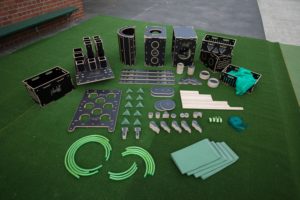
Nüdel Kart unpacked
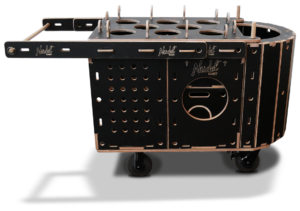
Nüdel Kart packed up
References

https://www.playaustralia.org.au/sites/default/files/LibraryDownloads/loose-parts-toolkit.pdf

Sewell, C. Wilson, J. Laing, B. and Veerman, M. (2020) Nudel Kart Teachers Manual (2020)

Wilson, J. and Wing Jan, L. Focus on Inquiry (second edition). Education Services Australia, Carlton South.

Play without Playgrounds

By Jeni Wilson

Play comes naturally

Remember play comes naturally to children. They want to play and are more than capable of entertaining themselves, sometimes for hours on end. It may come as a surprise, relief or disappointment that children can entertain themselves with minimal or no input from you. They CAN play without Playgrounds!


Observe Children

Children are imaginative, curious and are problem solvers. In fact, we can be led by their ideas. By sitting back and noticing what children are doing and saying during play, we can find out what’s going on for them, and their perspective on how the world works. We get invaluable insights into what they view as their place in the world and their questions about how things work.

During play children often get to express their ideas and needs, without adult judgement and direction. They may be frustrated, angry, sad, stressed or joyous. Play is therapeutic and it is personalised when directed by children. Cat Sewell, (Play expert), says categorically – “you do not need to entertain them”. 

However, adults can ‘be there’, just not all the time.  Adults can be back-seat drivers, show interest and ask questions. You’ll know when your ‘interested’ becomes interference. When their ideas and play become yours they have lost the ownership that drives their play. See types of play.

Play without playgroundsLoose Parts for all

But fear not if you can’t get to a playground. Fixed playgrounds can be limiting.  Play in nature and with different odds and ends. This type of loose parts play has endless possibilities and a myriad of benefits. See Loose Parts article for ideas on materials. Student or child centred play works for multi-ability, multicultural and multi-age groups. It is non-gendered and non-themed. Loose parts play is suitable for every single child on this planet. All children can use and adapt loose parts according to their ability. They don’t have to be at a particular level of education, they don’t have to be at the same level as others playing, and they can have success. Children can play without playgrounds.

Examples of loose parts:

A pile of boxes, some fabric, a yoghurt container and a wheel off a broken toy could be a scarecrow. You’ve always wanted a scarecrow…but it’s better as a train if that’s what children decide. It’ll be more fulfilling for them, build their confidence, keep them focussed longer and create an intrinsic urge for them to solve their own problem. This is student voice and agency at its best.

Nüdel Kart

Have a look at the videos by the creators of Nüdel Kart. This extraordinary resource includes more than 200 loose parts that children can manipulate, build and play with. Nüdel Kart can be used in many settings, indoors and outdoors. It works across age groups from 3 yrs to 12 yrs and beyond, is not gender or culture specific and is highly supportive to people of all abilities. This resource can be used over and over again because of the unlimited possibilities. Nüdel Kart links seamlessly to world-wide educational priorities. 

Still not sure about play being led by children? 

Take a few minutes to sit back and watch your child/student at play and get an insight into the power and creativity of a child’s brain. 

You can find out more about Nüdel Kart here.

Self directed learning through play using a Nüdel Kart

References

Brown, K. (2014) What is the Purpose of Play? https://goodmenproject.com/featured-content/purpose-play-wcz/

Centre for Evidence and Implementation (2019). Nudel KART: encouraging play with children. (Developed for Playground Ideas). Melbourne, Australia.

Kenneth R. Ginsburg, ; and the Committee on Communications and ; and the Committee on Psychosocial Aspects of Child and Family Health Pediatrics January 2007,  119 (1) 182-191; DOI: https://doi.org/10.1542/peds.2006-2697

Sewell, C. Wilson, J. Laing, B. and Veerman, M. (2020) Nudel Kart Teacher Manual.

Sewell, C. in Anna Kelsey-Sugg with Erica Vowels for Life Matters (2020) Stuck inside with the kids during the coronavirus pandemic? Here are some ideas for creative play. ABC Radio National.