


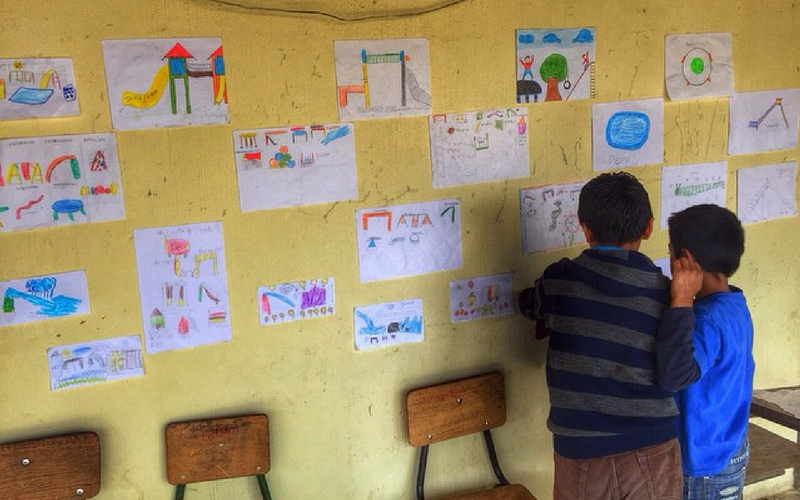
Early in our playground building experience, we were working on a preschool play area design in Uganda. We told one of the teachers we wanted to get ideas for the design from the kids and we asked her to have the kids draw pictures of what they wanted their playground to look like. When we came back to collect the drawings, the teacher handed us a stack of 30 drawings of the kids play area designs. And every drawing looked almost exactly the same: a slide, swingset, and a seesaw.

We realized that probably the only kids play areas the teacher (and the kids) had ever seen included these three elements. The teacher may have only ever seen one playground design and may have assumed that a playground could only look one way. So when she asked the kids to draw their dream play area, she drew a slide, swingset and a seesaw on the blackboard and asked the kids to copy it. While she had the best of intentions, this stack of drawings didn’t give us any inspiration for the design of their playground.
Even in situations where we’ve asked children to draw what they want their playground to include without giving them examples, their ideas are often limited to what they’ve seen before. Although directly asking children what they want their play area to include seems like the most obvious thing to do, it isn’t usually the best approach to engaging kids in design, for a few reasons:
+ Young children haven’t developed great self-analysis thinking skills yet. If you ask them how they like to play, they might say they like playing on swings. But if you watch them at play, they might actually spend their entire recess building little houses from twigs and leaves.
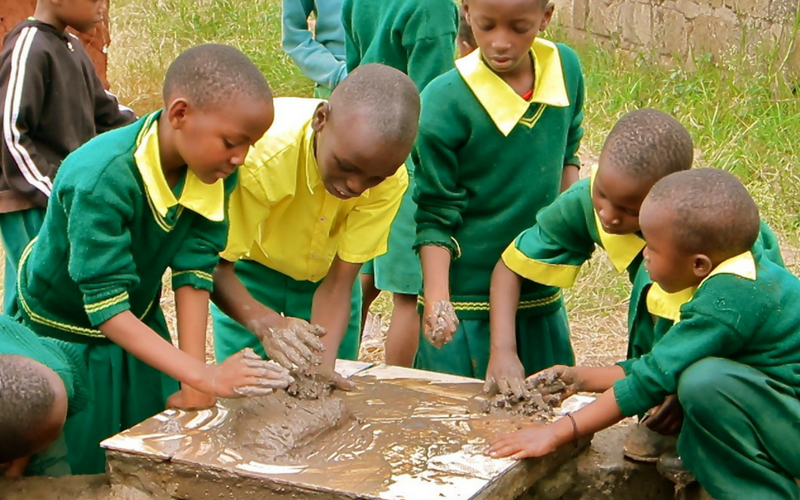
+ They’ll want to give you the “right” answer. Children are pretty intuitive. If you ask them what they want their playground to include they might just tell you want they think you want to hear.
+ Their knowledge of playscapes is limited (this goes for adults too.) What a kids play area can include is often restricted to the play areas they have seen. And most play designs around the world follow the same old patterns and look strikingly similar.

+ Asking adults directly about design can be problematic as well. Adults have trouble “getting in the shoes” of children and actually remembering what it was like to be their age and how they liked to play. Both adults and children may associate play simply with organized games or built structures (i.e. football or swing sets), rather than open ended activities and materials, (i.e. “playing house” or collecting fallen leaves.)
Despite these challenges, we still believe it is important to engage children and adults in design process for a few reasons:
+ While there are universal ways in which children around the world play, every community has unique local games and play traditions. Tapping into these in the design phase celebrates and validates these traditions and may give you great ideas of ways you can incorporate these games in your design to make it really amazing.
+ Engaging children in the play area design process gives them a chance to participate in what will happen to their space. Play areas are special, sacred places to kids. When adults come in and change their play space, they might feel frustrated or fearful that they will lose their favorite places to play.

+ Capturing children’s views on the design can be a way for adults in the community to learn more about how children play. Sometimes at the onset of the design process, adults have very firm ideas of what they want in the space (“It’s not a playground if it doesn’t have a slide!” or “We MUST have a football pitch!”) Redirecting adults to actually listen to children and consider how they like to play keeps things in perspective.
+ Instead of asking specifically about the design, focus on learning about children’s play and the unique games and play traditions the local community and use those ideas to help shape your design.
As much as you engage children in the design process, be careful not to place the burden of designing on children. That is the job of the designer. Your objective is to bring together children’s insights and inspiration with your own research on best practices in design and children’s play. As the designer, one of the best thing you can do to design a kids play area is learn about children’s play yourself. Having a comprehensive understanding of the depth and richness of play is essential.
If you’re interested in learning more about engaging kids in design, check out Playground Ideas’ Playground Builder’s Handbook. In Chapter 1: “Listen,” we cover the Asset-Based-Community-Development approach we use in our community consultations to begin the playground building process by focusing on a community’s strengths. We also share several design workshop activities we’ve used to gather children and adult’s ideas for playspace design.
How have you engaged kids in play area design? What worked/what did you find challenging? Share your experiences in the comments – we’d love to hear!