

Music exists across all cultures and acts as a tool to unite; to express celebration or mourning. As it turns out, this universal act of play also builds later literacy skills in children by aiding in the development of “phonemic awareness.”
“Phonemic awareness describes how well a child can hear, recognize, and use different sounds (called phonemes). For example, in the word cat there are three different phonemes: the /k/ sound, the short /a/ sound, and the /t/ sound. Children who are able to distinguish different sounds and phonemes are more likely to develop stronger literacy skills over time.” –Rebecca Parlakian with Claire Lerner, National Association for the Education of Young Children.
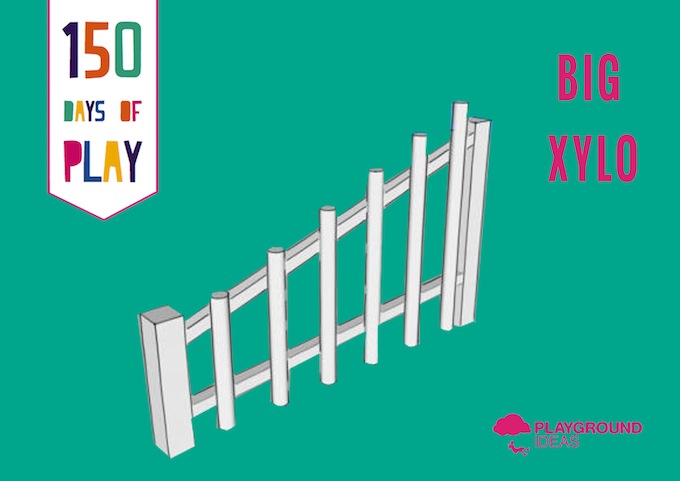
Adding outdoor instruments to a playground can develop these skills as well as encourage and celebrate local music traditions. The “Big Xylo," an outdoor xylophone made from steel pipes, makes a great addition.

Gulu, Uganda – Playground Ideas
It can be combined with other outdoor instruments to create a whole music centre.

Gulu, Uganda – Playground Ideas

Jinja, Uganda – East African Playgrounds
Or adapted to reflect locally relevant instruments, like this marimba, Guatemala's national instrument, built byPlay360on a playground in Guatemala.

Guatemala – Play360
Xylophones can, in fact, be made from nearly any conceivable material.
Like tree logs…

Uganda – photo by singingwells.org
Bottles…

photo by chasing cheerios
Stone…

Montshire Museum of Science
Wrenches…

photo by joshgarrels.blogspot.com
Even a bench…

by Tor Clausen
Xylophones can even be designed to play different tunes. Take a look at this amazing video of a giant wooden xylophone constructed in the woods of Kyushu, Japan to play Bach's Cantana 147 with a wooden ball:

If you’re interested in designing your own xylophone, Jim Doble‘s guide to“Basic Xylophone Building.”is a great place to start.
Follow the link to get the step-by-step instructions for building your own “Big Xylo”(Note: must create a free user account to see full instructions.)
Got an idea for a playground element?Join our community and submit your designs here.